
Origin: Tovilyis, The Beggar City

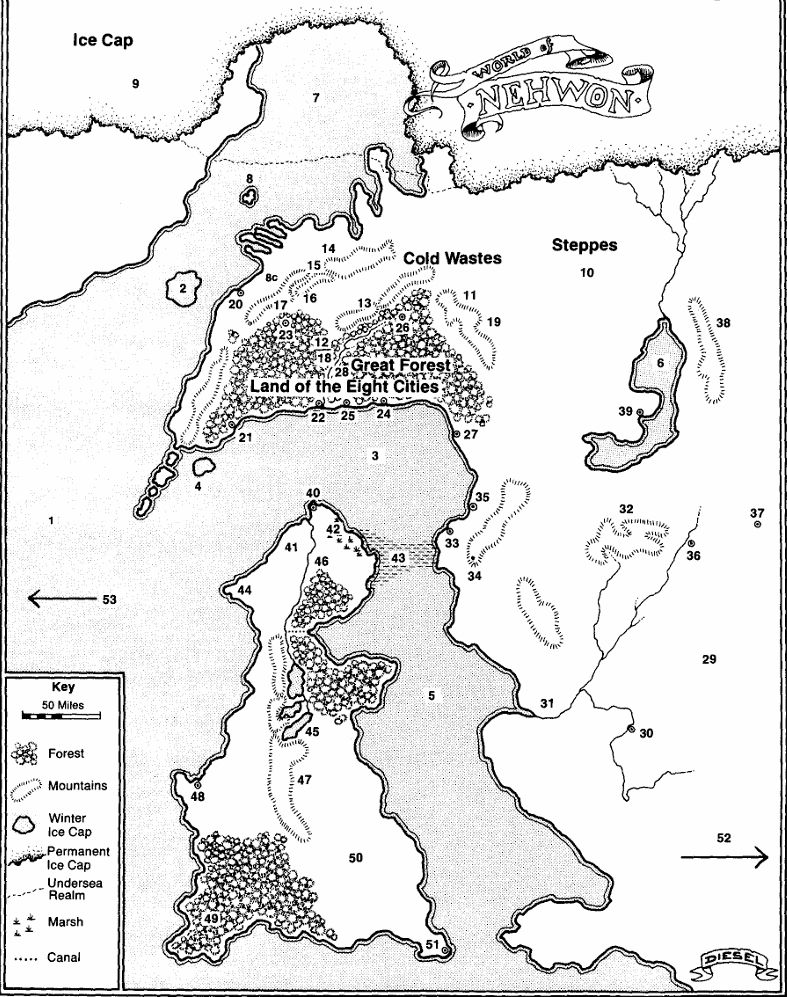
Tovilyis is a coastal city perched upon the marshy coast of the Sea of the East. To its west rise the Mountains of Hunger and it lies south of the Lakes of Pleea. Once a grand city, rich with trade goods and ruled a dynasty of powerful doges, Tovilyis is now a shadow of its former glory. It decays and slowly sinks into the waters of the Sea of the East, its vast canal system no longer alive with bustling commerce. Tovilyis is known widely as “the Beggar City,” but this was not always the case.
A century ago, the Doge of Tovilyis waged war against the Land of Lankhmar. Drunk on power, the Doge believed that the then-powerful merchant state of Tovilyis was destined to become the predominant power in Nehwon. The Doge’s forces were crushed by those of the City of the Black Toga and Tovilyis became an occupied city, one wholly dependent on Lankhmar’s generosity.
Tovilyis the Beggar City! Once a powerful merchant city-state on the western coast of the Sea of the East, it is now a place of stinking canals, sinking buildings, and petty noble families engaged in political one-upmanship (and the occasional assassination) to fill their decadent lives. Although an occupied vassal of Lankhmar, Tovilyis is several weeks travel southeast of the City of the Black Toga and the perfect place for those who’ve made enemies in the City of Sevenscore Thousand Smokes to lay low, away from the eyes of their foes. The political and social rivalries between Tovilyis’ noble houses, the villus [pronounced VILL-oos] means there’s always some petty lordling in need of sellswords and sorcery-for-hire.
Much of the city is perched atop several islands at the mouth of a tidal estuary. A network of canals serves as approximately half of the city’s thoroughfares. In its heyday, these canals were filled with traffic as small ships and locally crafted boats known as canalets came and went. Now, the canals are stinking rivers filled with trash, sewage, and rotting corpses—both animal and human. The foundations of the oldest buildings are sinking into the marshy earth, and several city blocks are now partially underwater. Where the old streets and bridges have failed, new ways to get about the city have sprung up. Timber walkways leading between buildings are a common sight. Rope bridges, scaffolding, and even zip lines extend from the upper stories and roofs, creating a spider’s web of tertiary thoroughfares across Tovilyis. For those who know the city’s unofficial byways, it’s possible to go from one end of Tovilyis to the other without fear of dampening their feet.
The buildings of Tovilyis—those that remain standing— are largely built of stone quarried from the foothills of the Mountains of Hunger. This sturdy construction allowed them to survive the fierce storms that sometimes blow in from the Sea of the East and stand on solid foundations in the soft soil. Roofs are slightly sloped or flat, with slate and ceramic tiles being the norm. Tovilyis was once renowned for its glass work and remnants of this past industry survive as stained glass windows in temples and the lavish homes of the villus.
In the sections of the city where the ground has subsided, the lower floors of some buildings are either awash with knee-deep water or completely submerged. Once, before the city’s nobles became utterly obsessed with their own infighting and vendettas, the worst of these compromised buildings would be bricked up to prevent squatters from further damaging the structures. That seldom occurs these days, but there remain several dozen sealed-up buildings around the city. What secrets might still lie in their rotting interiors?



Comments