
Origin: Land of the Eight Cities
Updated: Apr 21

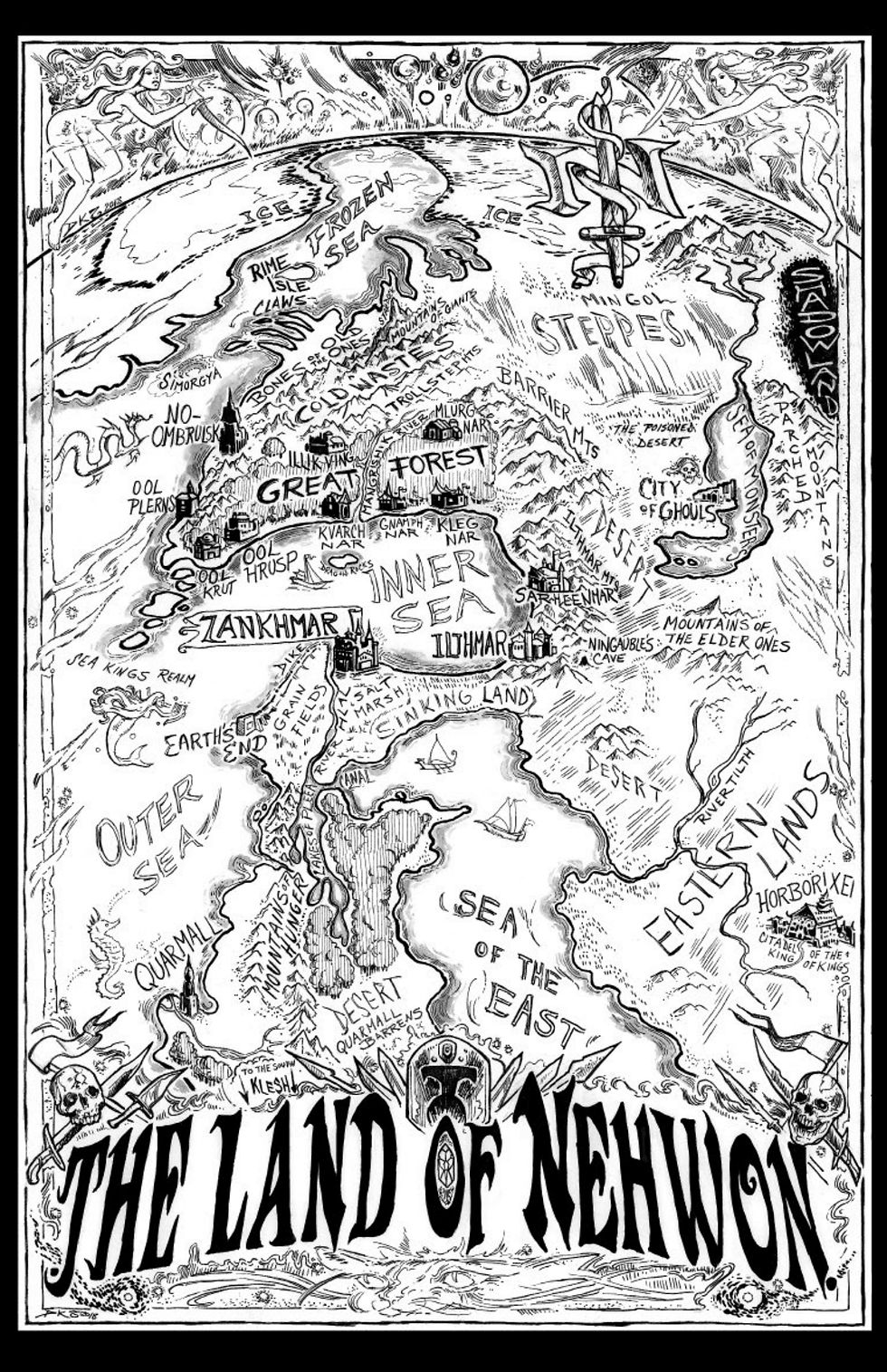
The residents of the Land of the Eight Cities, commonly called Eight-Citymen or Eight-Citywomen (and sometimes just Foresters) tend towards swarthy complexions and dark hair, traits inherited from their nomadic ancestors from the eastern steppes and deserts. Intermarriage with the former Lankhmart inhabitants of the region, however, gives them a larger range of physical traits than Mingols or Easterners, and it’s not unknown to find paler skin and lighter hair and eyes among the Foresters. Although civilized, the Land of the Eight Cities isn’t so far removed from its unsettled past that its people have forgotten their tribal ways and manners.
An interesting social tradition is for Eight Cities men to treat their women (especially in Kvarch Nar) with special reverence. Accusing a woman of an indecent act or casting aspersions on her honor, whether factual or false, is the fastest way to initiate a duel with the nearest skilled Eight Cities swordsman.
TL;DR for each city:
Here are quick descriptions of each city. The options for characters that I mention are just some of the more obvious ideas that popped into my head. By all means, you're invited to create something completely different.
Gnamph Nar: This city is a haven of smuggling and corruption. A PC with strong criminal ties and an Eight Cities Origin will probably be from here.
Illik Ving: The smallest of the cities, Illik Ving is surrounded by mining operations. A player who wants a character with "villager visiting the big city" feel could be from here. Also, a good choice for a PC with the Blacksmith occupation.
Kleg Nar: This city supports a nearby fortress that defends against Mingol invaders. A player from here will probably have a background closely tied to the military of Eight Cities. The Soldier occupation easily works here.
Kvarch Nar: The largest of the Eight Cities and home to the Eight Cities Overlord, Kvarch Nar is a cosmopolitan metropolis second only to Lankhmar. If you want to play a PC with some woodland skills but also with some worldly sophistication, then this could be a good choice.
Mlurg Nar: Similar to Illik Ving, this town is surrounded by mining operations. Unlike Illlik Ving, Mlurg Nar is a hotbed of lawlessness and corruption. Think Deadwood the HBO series. A PC who wants to play a rough brigand who lacks societal polish could call this place home.
Ool Hrusp: Home of the "Mad Duke" and his Gladiator Arena. Gladiators can be captured slaves forced to fight for the Mad Duke's amusement or freemen who chose to fight for glory and fame.
Ool Krut: Famous for crafting sails for ships. A PC with a sailor or craftsman occupation could call this place home.
Ool Perns: The only city located on the coast of the Outer Sea and the second smallest city. Surprisingly the largest exporter of timber in the Eight Cities, which the local priesthood finds objectionable. Another good Origin for a PC that has a "villager visits the big city" idea.
Gnamph Nar
Sometimes called the “Caravan City,” Gnamph Nar is the second largest of the Eight Cities. While Kvarch Nar is larger and has a busier port, Gnamph Nar is where land trade congregates in the Forest Land. Caravans and merchants coming from Lankhmar, Ilthmar, the Eastern Lands, Sarheenmar, and even from distant Far Kiraay arrive at the Great Market of Gnamph Nar. Countless warehouses crowd the edges of the Great Market, holding cargo destined for the marketplace or bound for the further reaches of the Land of the Eight Cities and beyond. Horse flesh, oxen, mules, and even the rare pack bear all go for a premium in Gnamph Nar, for it is here that caravans form and reform, before departing for farther off destinations.
Gnamph Nar is a rougher city than Kvarch Nar. Lacking the Overlord’s direct presence like Kvarch Nar does, the Duke rules with a freer hand and the criminal underworld operates with cautious insolence. Smugglers and pirates frequent Gnamph Nar’s port, meeting with shady traders and contacts in the harbor-side taverns and social clubs, while thieves and alley-bashers prey on foreign merchants laden with coin. The city watch of Gnamph Nar is easily bribed and could even teach their Lankhmart confederates a thing or two about graft.
The Overlord is aware of Gnamph Nar’s reputation but has yet to make any serious efforts to tamp down on the city’s criminality. So long as the Duke of Gnamph Nar keeps the underworld in some semblance of restraint, the Overlord is content to let business function as it will in the Caravan City. However, anything that either threatens the trade life blood of the Land of the Eight Cities or endangers the food shipments from Lankhmar and other foreign parts would be crushed in an instant by the Duke, knowing that failing to do so would result in his immediate replacement.
The Thieves’ Guild of Lankhmar has several secret operatives in Gnamph Nar tasked with funneling information back to the City of the Black Toga. Characters in good standing with the Thieves’ Guild might find themselves ordered to help these agents, act as couriers between the two cities, or serve as deniable (and disposable) assistants to the Thieves’ Guild in Gnamph Nar. PCs with the Guild’s enmity might find these isolated brethren of Thieves’ House easy pickings and a way to strike back at the Guild without fear of an overwhelming and immediate response.
Illik-Ving
The smallest of the Eight Cities, Illik-Ving barely qualifies as a metropolis. In an older land, it would be a modest town, but in the youthful Forest Land, its age earns it the designation of city.
Illik-Ving is seldom a destination, but instead a stopover on a long journey. Travelers and the occasional mule caravan pass through the frontier city on their way to No-Ombrulsk or the Cold Waste when sea passage proves too costly. On rare occasions, the more worldly Northern barbarians bring amber, furs, or pirated goods through the tiny city on their way to the larger markets of Gnamph Nar, Kvarch Nar, or Ool Hrusp.
As a distant outpost of civilization, Illik-Ving is a staunch and self-sufficient community. It knows that when the winter storms blow down off the Trollstep Mountains, bringing with them months of snow that choke the roads south, Illik Ving stands alone. This trend towards self-reliance manifests itself in the frugality of its residents. Travelers to the city of ten complain of the small portions one receives at a meal, but the residents know that a small bowl of porridge now means all the more grain in the granaries when the cold months come. But if one is willing to overlook the scant meals, there are plenty of opportunities for wealth in Illik-Ving.
While the Land of the Eight Cities owes its wealth as a whole to the mineral resources it commands, few of the cities are as well-positioned as Illik-Ving to profit from the rare metals of the Forest Land. The Trollstep Mountains stand just beyond the city’s boundaries, and every year sees prospectors returning to the mountains and new mines sunk to draw out the gold, silver, tin, and iron that run through the Trollstep’s veins. Goods and services are commonly bought with tiny bags of gold dust in Illik-Ving, and the taverns are business places where older prospectors sell their claims to younger, wider-eyed newcomers each spring.
This trade in precious metals draws adventurers, mercenaries, and dreamers to Illik-Ving like shimmer-sprights to treasure. Many seek to stake their own claims in the mountains, hoping to strike the motherlode leading to a life of ease. Others, perhaps more pragmatic, earn their wages as caravan guards protecting mineral shipments south to Kvarch Nar or watching over assayers’ houses in the city. Yet others make their fortunes by preying on those same caravans or lonely prospectors working in the foothills.
Illik-Ving keeps order and dissuades robbers and raiders by sending out patrols to watch over the roads and mountain passes. These patrols work in groups of four, armed with spears and wearing boiled leather or newly wrought chain mail. The training of these guardsmen varies, however, and many know only the rudiments of martial skills. Most were simple shepherds who traded in cold, lonely nights of watching their flocks for cold, lonely nights keeping an eye on their fellows.
Illik-Ving is home to the witch, Shuneel, who dwells in an aged leather tent down one of the city’s twisted side streets. Shuneel, a hag of modest power, makes a comfortable living telling fortunes, providing restoratives, and otherwise catering to the prospectors and Eight-Citymen desperate for supernatural aid. It is said that, while willing to practice her art for anyone with the coin to pay her.
Kleg Nar
The easternmost of the Eight Cities, Kleg Nar is both city and fortress, a timber bulwark against predation deeper in the Great Forest. Situated in a three-mile gap between the last foothills of the Barrier Mountains and the rocky shores of the Inner Sea, Kleg Nar began life as Hlelchmar, built by Lankhmar to watch the eastern flank of their woodland colonies. It performed this function admirably, fending off the smaller, less-advanced desert tribes like the Kilyolsho for three hundred years. Then the nomads arrived and Hlelchmar fell, overcome by the cunning of Glaggerk and Lanch, and the howling horde behind them.
It was Hlelchmar’s failure that led to the current fortified nature of Kleg Nar today. The Foresters remember how their ancestors failed in their defense and are unwilling to make the same mistake.
Circumstances of topography affect the design of Kleg Nar. Just west of a low, flat bowl of land flanking a deep-water cove along the rocky shore, are two tall hills separated by a narrow pass. The fortress of Kleg Nar straddles the two hills, the Sea Road running through the pass. The fortress consists of a timber palisade built atop an earthen embankment that runs north-south, its long wall extending across the road. Traffic heading toward the Forest Land’s capitol or east to Sarheenmar must pass through a wooden gate set between the hills. While the woods grow close the city of Kleg Nar, a cleared killing field is maintained beyond the fortress’ walls, the better to winnow the attacker intent on laying siege to the defensive wall.
The city of Kleg Nar exists in the lowland surrounding the harbor and as such does not benefit from the protection of the fortress’ palisade. Houses collect along either side of a north-running road that connects with the main trade road, dividing the city into its East and West Quarters. The West Quarter is largely devoted to serving ships landing in the harbor and the garrison of the fortress with equal enthusiasm. The East Quarter is a mixture of private homes, businesses, and civic government buildings.
Kleg Nar has been sacked in the past by Mingol raiders coming around the southern tip of the Barrier Mountains or up from Sarheenmar. The residents of Kleg Nar respond by sending their women, children, and elderly to seek safety in the fortress while the watch and Eight-Citymen defend their homes in fierce street-to-street fighting. The city has been rebuilt several times and the scent of fresh sap in the air, leaking from the newly rebuilt timber buildings, indicates a Mingol raid has recently occurred.
The Lord Mayor of Kleg Nar is an appointed position, its official usually chosen from military officers who’ve served on the garrison of the city’s fortress. As a result, the Lord Mayor is typically concerned with order and discipline in the city, and the watch is well-trained. The crime rate of Kleg Nar is low and opportunities for criminal ventures are few. Few with criminal or adventurous minds spend much time in Kleg Nar, moving quickly through the small port town in the fortress’ shadow.
Kvarch Nar
Kvarch Nar is the oldest of the Eight Cities, founded by Lankhmar as a foothold into the Great Forest when the City of the Black Toga turned its attentions across the Inner Sea. Originally named Hwarshmar in the Lankhmar tongue, the city is built on a high bluff overlooking a deep-water harbor at the mouth of the Mangrishik River, one of the few places along the rocky headland where ships can anchor. A series of flag signals are used to control traffic into the port, giving permission to captains when berth space allows for mooring or forcing them to wait beyond Kralk Island, an isle that forms part of the harbor’s breakwater.

Cargo is quickly unloaded by the cadres of longshoremen working the city’s harbor. From the docks, two winding roads make their way up the bluffs to Kvarch Nar, but several windlass-powered elevators haul freight from the docks below up to the city as well. This second method of transportation is faster and more efficient, but a toll is applied to each cargo-load heading up the lifts. However, for some goods, the financial benefits of getting cargo quickly to market outweighs the additional cost.
Also situated at the harbor are the Fleet-Docks, home to the Land of the Eight Cities’ naval forces. Double-masted, red sailed ships and bireme war galleys moor here when not on active patrol, usually ferreting out pirates and Sea Mingols on the Inner Sea. Many of the fleet’s captains have sought training in Lankhmar and are well-versed in that city’s naval tactics. It’s almost as if they see naval conflict with the City of the Black Toga as inevitable.
Kvarch Nar is the capital of the Land of the Eight Cities, home to the palace-house of its Overlord. The ruler dwells in a sprawling mansion, many-storied and bearing a number of wings seemingly added in haphazard fashion. Mica-paned windows look out over the city and harbor, while green clad troops dressed in leather and hide armor and bearing copper-worked iron helms keep watch over the Overlord. It is here that the Overlord meets with his Lords of Council, setting policy for the governance of the Forest Land.
Like all of the Forest-men cities, Kvarch Nar lacks a defensive wall, and the Great Forest grows right up to the city’s verge. At the margin between city and forest stands the Temple of the Gods of the Wood, a gigantic enclosure surrounding sixteen sacred ilrisk trees. The temple is open roofed with clusters of shrubbery planted about the top of it, attended to with pious devotion by the Priests of the Forest Gods.
The buildings of Kvarch Nar are packed tightly together, turning the streets of the city into little more than close, winding alleyways. Only a few roads, such as High Street, running from the Great Market to the Riverway, and Granary Street, which bisects it at Golden Square, offer clear traffic ways for wagons.
The Mangrishik River bisects the city, a pair of bridges crossing over the deep ravine that runs down to the harbor. The Mangrishik is a fast-moving river that only slows just before reaching the sea, its length strewn with rapids and cataracts. No river travel is possible past a few miles north of Kvarch Nar.
As suggested, Granary Street and Golden Square are the center of the Forest Land’s grain storage and distribution. The grain ships of Lankhmar regularly dock in Kvarch Nar, unloading their golden cargo in the city. The grain supply is stored in the granaries of Kvarch Nar, distributed to citizens in a daily dole and sent by wagon to other cities throughout the Forest Land. Given the granaries’ importance in the stability of the realm, the silos are well-guarded by both man and cat, and regular inspections keep loss to theft and rot at a minimum.
Kvarch Nar is the most cosmopolitan of the Eight Cities and peoples from around Nehwon can be encountered in the markets, dock, and the twisted city streets. While small in comparison to Lankhmar, Kvarch Nar nevertheless has a wide variety of services—legal and otherwise—available for sale, as well as some of the finest and worst specimens of humanity Nehwon has to offer. Almost any city adventure might begin in Kvarch Nar, and it makes a great place for PCs to lay low for a while if Lankhmar ever become too hot for them to handle. Here, they’ll find a number of expatriates from Lankhmar and can quickly assimilate themselves into urban life in the Forest Land.
Mlurg Nar
Like its sister city of Illik-Ving, Mlurg Nar is a frontier metropolis of small size, poised on the boundary between the civilized realm and the barbaric hinterlands. Those who come to Mlurg Mar are either in search of their fortune or have run out of options in the more settled southern regions of the Forest Land. The result is a rough-and-tumble people quick to violence and looking for riches. In other words: the perfect place for adventurers.
Mlurg Nar is a mining city, eking out its livelihood from the copper, silver, and gold deposits in both the Trollstep and Barrier Mountains. Fortunes change hands overnight in the Rat-Snake games held in the city’s countless taverns and gaming houses, and the murder rate is equal to Lankhmar once one adjusts for population. Whereas the mines outside of Illik-Ving are somewhat registered by the assayer’s house, the claims of Mlurg Nar are wildcat operations, held only by those strong enough to defend their mines from rival claim jumpers. It is said that if all the murdered prospectors whose bones lie in forgotten defiles or shallow graves in the mountains suddenly stood up, Mlurg Nar would triple in size.
Mlurg Nar is a cosmopolitan city for its small size. It’s common to see Eight-City folk, Mingols from the Steppes, and Northerners from the Cold Waste in town, all trying to eke out their share of the mineral wealth flowing through the city. As the anchor point to the Gnamph Nar-Mlrug Nar trade route, the mining city is also the last supply point for merchants and traders heading into the Cold Waste. A number of caravansaries exist in Mlurg Nar to cater to these commercial expeditions.
One of the most popular (if raucous) nightspots in Mlurg Nar is the Ilrisk Bough, an inn and tavern catering to the wildest of the city’s visitors. A cellar under the inn houses a pit arena where bare-fisted brawlers face off for the entertainment of others. On some nights, the pit sees bearbaiting and dogfighting in addition to man-against-man bouts. Recruiters from Duke Lithquil’s arena often visit the Ilrisk Bough looking for new talent, and an adventurer looking for employment (or just a means to gain access to the Duke’s palace-house) might find the pit fights a way to do so.
The Duke of Mlurg Nar runs his city with a mixture of lais sez-faire government and iron-fisted autocracy. So long as business is booming and the people are distracted by the violence and vast riches the mines provide, the Duke allows things to continue. However, if any faction or party within the city threatens the status-quo, the Duke’s troops—brutes one and all—quickly, decisively, and demonstrably, put them down.
Ool Hrusp
Resilient Ool Hrusp began life as Ool Hluss when Lankhmar carved it out of the forest. Even in the years before the Foresters came west, Ool Hrusp has been a city somewhat different than its peers. Of all the cities, Ool Hrusp is the only one that bears any buildings of stone—old structures erected by the Lankhmarts when they laid claim to these lands. These stout, defensible buildings encouraged Lankhmar to hold onto Ool Hrusp for a full generation after the other seven cities had fallen to the eastern nomads. Ool Hrusp is also unique in that it is a walled city, a defensive necessity given the cleared ground outside its boundaries. This wall makes the streets and housing within the city even more cramped than most Forest Land metropolises. Lankhmarts feel much more at home in Ool Hrusp than the other Eight Cities.
Ool Hrusp is one of the few of the forest cities that actively practices herding and agriculture, granting it a higher level of self-sufficiency than its sister cities. Vineyards that produce the wine known throughout Nehwon climb the hills overlooking Ool Hrusp. Herds of cows graze in the plains outside the city walls. These plains are small but are considered large meadows by Forest Land standards. The Priests of the Forest mutter darkly about the felling of the trees to create these fields, but the herdsmen tithe enough of their annual profits to the temples’ coffers to calm ecclesiastical waters.
Like Kvarch Nar, Ool Hrusp does its part to combat piracy in the Inner Sea. The city’s navy regularly sends out “bait ships,” modestly sized vessels appearing to be nothing more than ordinary trading ships but filled with marines. This tactic has sunk more than a few Sea Mingols and privateers who’ve mistaken a bait ship laden with marines as a defenseless merchantman ripe for plunder.
Ool Hrusp’s most infamous resident is its ruler, Lithquil, the so-called Mad Duke. Duke Lithquil enjoys gladiatorial games for his amusement, holding them in a special arena attached to his palace-house. From around Nehwon, the Duke’s agents procure the most interesting, but not always the most talented, warriors found, shipping them to Ool Hrusp for the Duke’s entertainment. Theatrical or skilled warriors and other adventurers can make a decent living acting as the Duke’s gladiators, but at the risk of sudden death should Lithquil ever cease being entertained.
The Tower of the Buried Prince is a curious landmark in the city. This lofty stone minaret rises high over the city, dwarfing even the palace-house of Duke Lithquil. Once known by another name, the Tower of the Buried Prince was erected by a Lankhmart noble, scion of one of the Overlords. The thought of burial, especially a premature one, so terrified the prince that he spent his whole short life in the uppermost room of this tower, far from the earth he so abhorred. A sorcerer had foretold that he would be buried alive and the prince sought to thwart such a fate. His efforts came to naught, however, when a tremendous sandstorm, carried on typhoon winds from the Poisoned Desert, crossed the Inner Sea to enshroud Ool Hrusp in a maelstrom that obscured the sun. The wind-born sands filled the prince’s lofty room, suffocating him and proving the sorcerer’s words to be truth. The tower stands abandoned and purportedly haunted by the restless spirit of the prince and his slain servants. Other stories tell of the prince’s hidden treasure vault somewhere within the turret, as yet unfound…
Ool Krut
Ool Krut lies furthermost along the northern coast of the Inner Sea. It is a modest-sized city situated on coastal highlands above a deep-water harbor. Northeast of Ool Krut, the land is boggy and wild flax grows in abundance on the borders of these marshes. The people of Ool Krut turn this natural resource into linen canvas and Ool Krutian sails are considered some of the finest in Nehwon. A vessel trimmed with Ool Krut canvas enjoys a +2 bonus to all seagoing rolls, including saving throws against damage. Fitting a ship with Ool Krut canvas runs 250 gold rilks (or equivalent) per mast.
A small shipyard fronts the harbor, constantly busy as vessels dock in Ool Krut for refitting or repair. Costs are high at the shipyard, due partly to the quality of work, but also because the Lord Mayor demands a percentage of the shipyard’s annual profits. This shakedown has resulted in a movement among the shipyard’s owners to possibly form a Lankhmar-style guild with other merchants who make their living off of the sea trade. They hope that such a mercantile syndicate might prove formidable enough to match the Lord Mayor’s political might. A few Lankhmart “advisors” are at work in Ool Krut, ostensibly to assist in the formation of this new guild, but whose true motives may be far more questionable and to the benefit of Lankhmar.
A sea-green painted temple rests atop a small island in Ool Krut’s harbor, accessible only by boat. This tabernacle is devoted to the Sea King and is staffed by a quartet of aquamarine-clad priests and priestesses. A long dock extends from the island, and vessels outbound from Ool Krut often moor there briefly to donate to the temple before embarking on a long ocean voyage. It is said that a fortune in pearls, including rare black and blue pearls, are stored in a submerged treasure chamber beneath the temple, guarded by exotic aquatic beasts.
Adventuring parties looking for a change of pace from the criminal underworld of Lankhmar will find plenty of opportunities for political and mercantile skullduggery in the otherwise placid city of Ool Krut. Those seeking the usual nefarious antics might pit their talents against the Sea Priests and hope to come out richer as a result.
Ool Plerns
Ool Plerns, like Illik-Ving, would scarcely be counted as a metropolis in more civilized lands. However, as the only seaport on the Outer Sea, Ool Plerns’ importance in trade more than makes up for its size.
While all the settlements of the Forest Land exist surrounded by vast woodlands, Ool Plerns is a tiny oasis in a thick and tangled forest. The woods surrounding Ool Plerns are bountiful to the point where the tiny city makes its living first and foremost in the timber trade, making it an oddity in the Land of the Eight Cities. This industry is sternly and righteously overseen by the Priests of the Forest who ensure that the traditional sacrifices and religious replanting of fallen trees is practiced without fail. As such, the Priests hold a power in Ool Plerns even greater than its Duke. Merchants hoping to benefit from the Ool Plerns timber trade are advised to bring gifts to the grand and intricately carved Temple of the Woods located at the city’s center.
Ool Plerns is also home to a small whaling yard, from which three small sloops operate. These vessels ply the shallow waters along the coast, spearing small whales and the rare young leviathan, bringing their catches back to the yard for rendering and butchering. The priests of No-Ombrulsk are aware of this business and have denounced it from their northern temple. It is possible that they make take more direct action against the whalers in the near future.
In later years, the Gray Mouser helps establish a thriving timber trade between Ool Plerns and treeless Rime Isle, marking an economic upturn in the tiny Forest Land city and a building boom in remote and semi-mythical Rime Isle.
Recently, an ancient building of stone has been discovered in the oldest woods northeast of Ool Plerns. This structure is half-buried beneath the roots of titanic, antediluvian trees and the forest around it seems to whisper. Shadows appear darker around the stone building and the Priests of the For est warn any from exploring the “accursed ruin.”


Comments